If you have a spare Raspberry Pi laying around you can easily turn it into a do-it-yourself “blackbox” for your airplane.


is a free and open-source Raspberry Pi project designed for general aviation pilots who would like to built a device that will provide them with flight planning, weight & balance calculations, checklists, real time flight monitoring & recording of numerous data points and an active alert (SMS & Email) system.
I started this project with my sons David and JM over a year ago and our primary goal was to keep the design as simple as possible so that it can easily be assembled by someone with limited electronic or software programming abilities.
When completed, the project will be free to be used “as is” . We are still in development but your comments and/or suggestions are welcome.
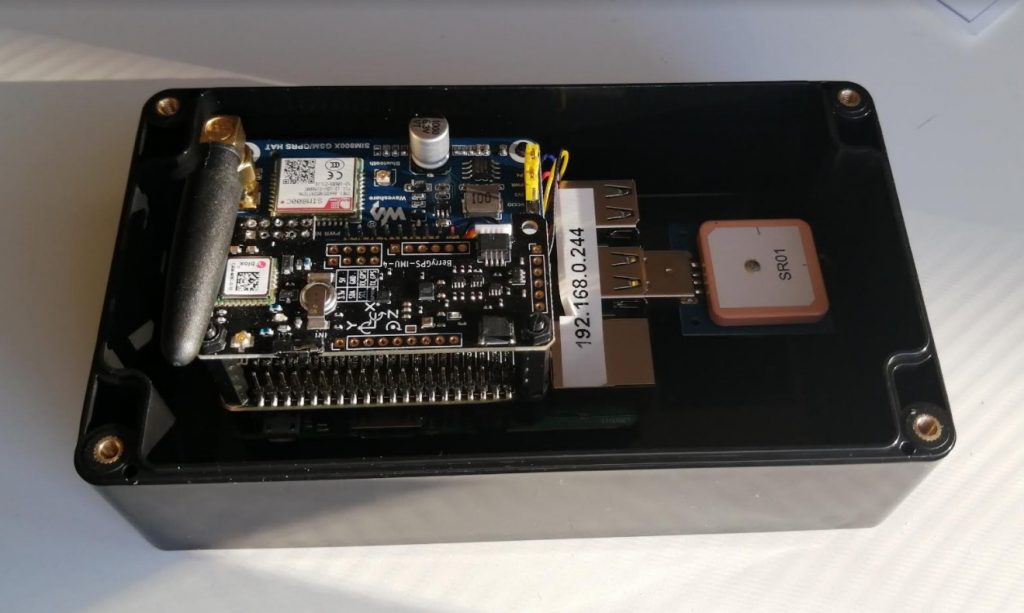
All of the components we used to built Blackbox are readily available on line at a reasonable price (see the Hardware section). After your hardware is assembled, you will be able to download an image (see the Software section for detailed instructions), get your own sectional maps covering your area of operation then setup the Blackbox server as per the supplied information.
MODES OF OPERATION:
The Blackbox device has been designed to work in two distinctive modes: Autonomous & Live.
AUTONOMOUS :
When operating in an autonomous mode, Blackbox uses a Pi LTE or GSM communication module to continuously transmit real-time data to the Blackbox webserver. No user interactions is needed during autonomous mode; Blackbox device will start its operations as soon as power is applied to it via the airplane USB outlet or an external battery.
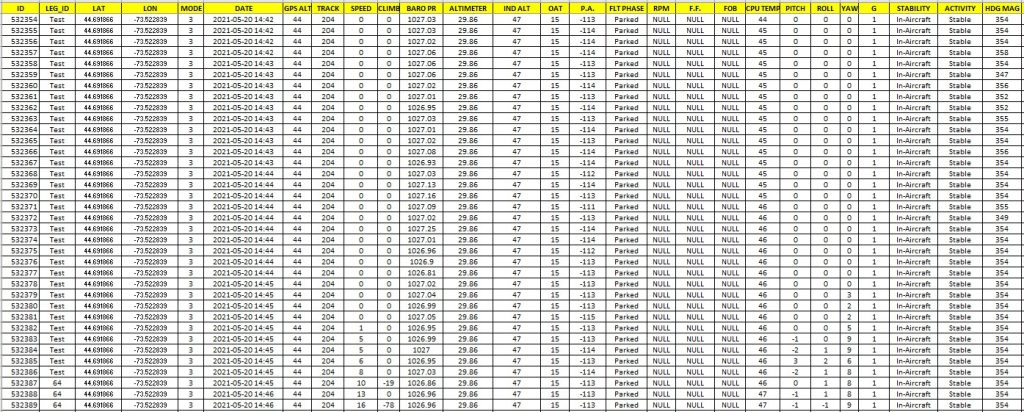
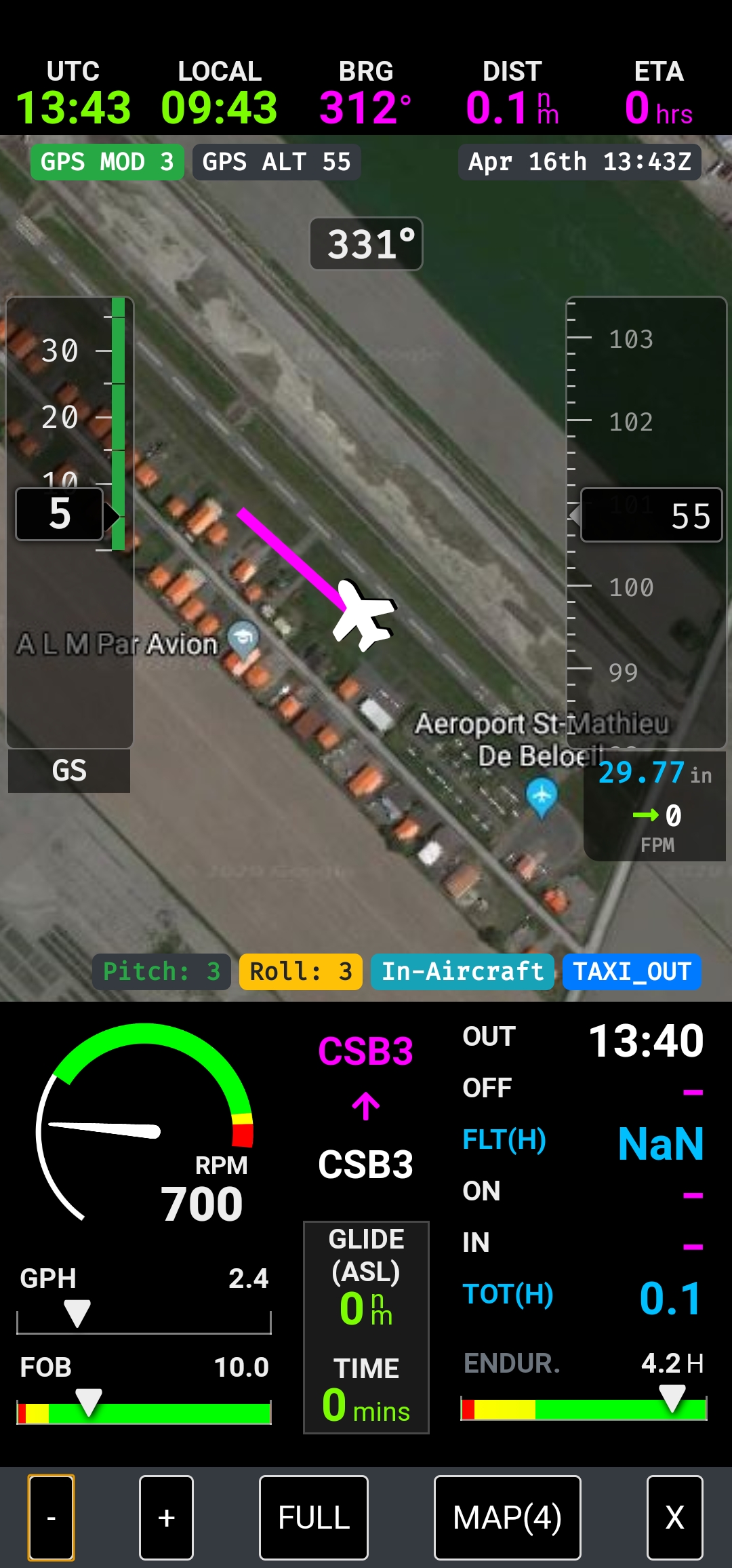
Blackbox provides a special data setup option to automatically turn off data transmissions while airborne if your country does not allow it. The system will nevertheless back fill all of the info when you land at destination. When in operation, Blackbox will automatically record and transmit over 15 data points every few seconds:
- Date/Time (GMT)
- Latitude
- longitude
- Pitch angle
- Roll angle
- G loading
- Barometric Pressure (hPa)
- Altitude (feet)
- Ground Speed (Kts)
- Climb Rate (Ft/Min)
- True Track
- Mag Heading
- Current Phase of Flight:
- Taxi-out
- Takeoff
- Climb
- Cruise
- Descent
- Land
- Taxi-in
- Parked
- Flight Times:
- OUT time
- OFF time
- ON time
- IN time
- FLIGHT time
- BLOCK time
- GPS Health Status:
- Satellites used
- Satellites locked
- Current GPS mode
- System Status:
- Motherboard Temp
- Free space
- CPU & RAM usage
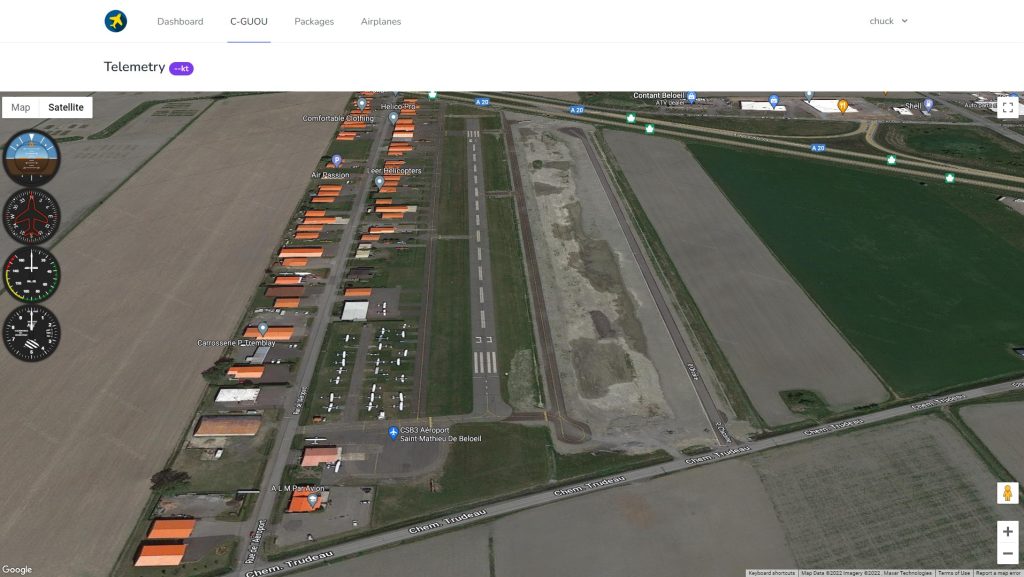
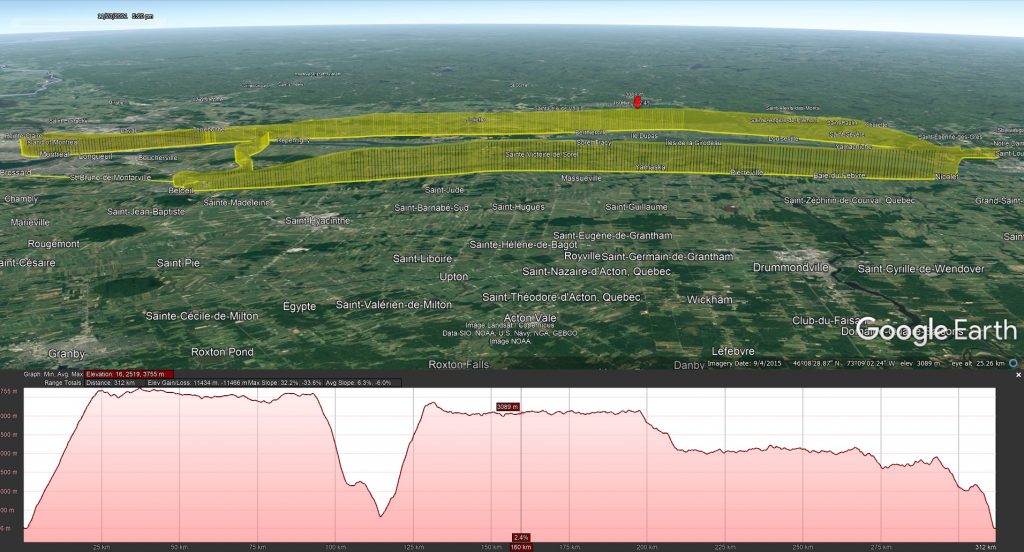
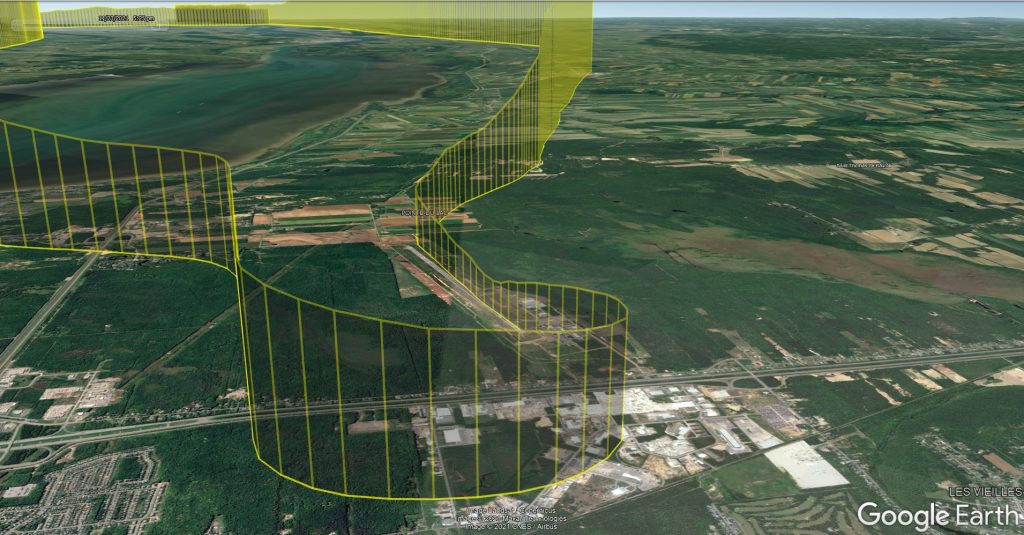
Users with access to the Blackbox Webserver will be able to securely logon using their PC or cellular phone and review previous or current flights as they are/were recoded during flight. The Webserver interface provides the users with numerous tools to analyze the flights, including Excel and Google Earth file outputs.
Having the capabilities to follow a flight in real time can be a fantastic tool for an instructor who would like to monitor a student’s first solo, or for a mechanic that has been advised by a Blackbox SMS message that one of the fleet airplane may have sustained a hard landing or an over G condition or that a maintenance event needs to be completed in a few days or weeks.
Blackbox will also send a flight complete email (or SMS) report to the user, including all pertinent information required in the pilot & airplane logbooks.
Using the Blackbox server display, it is possible to review the airplane’s flight path and altitude in a 3D type view.
With Blackbox you will also be able to flag different events like:
- Day & Night Touch & Go
- Aerobatics
- Spins & Stalls
- Hard landings (i.e. high ‘G’ @ touchdown)
The software will also keep track of required maintenance events and sent an email alert for:
- Time or Calendar based inspections,
- Customizable for specific items i.e. propeller time, ELT, landing gear, etc…
The list of items or maintenance events to be tracked is fully customizable.
LIVE :
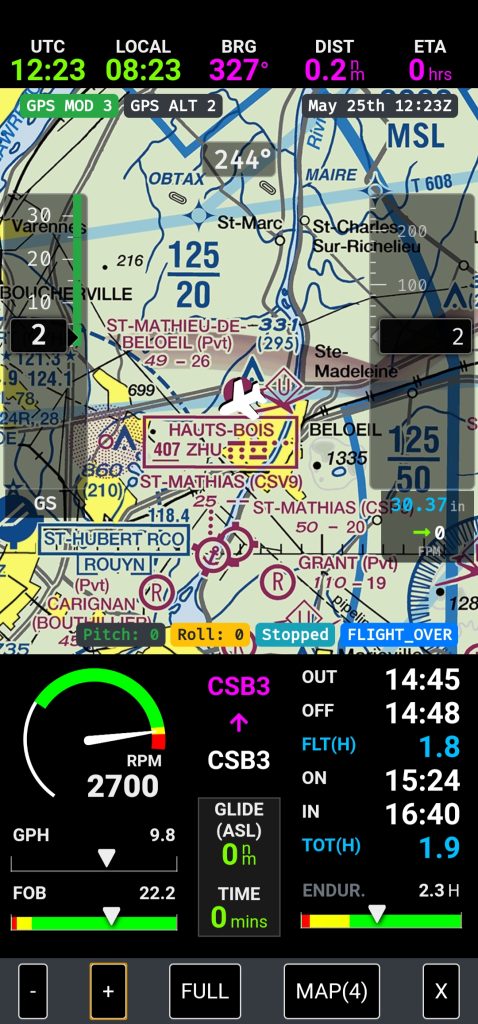
In the live mode, the pilot will use WIFI to log on to the Blackbox device with a cell phone or a tablet. Blackbox is compatible with any browsers running on any type of platforms or OS, i.e. cell, tablets, computers running Windows, MacOS, Android or Linux.
While in LIVE mode, all of the Autonomous modes of operations are also kept, data is still recorded and transmitted to the Blackbox webserver.
The following features are also available in live mode after a WIFI connection to the Blackbox device is established:
- Flight Planning tool, departure, destination, cruise altitude, weight.
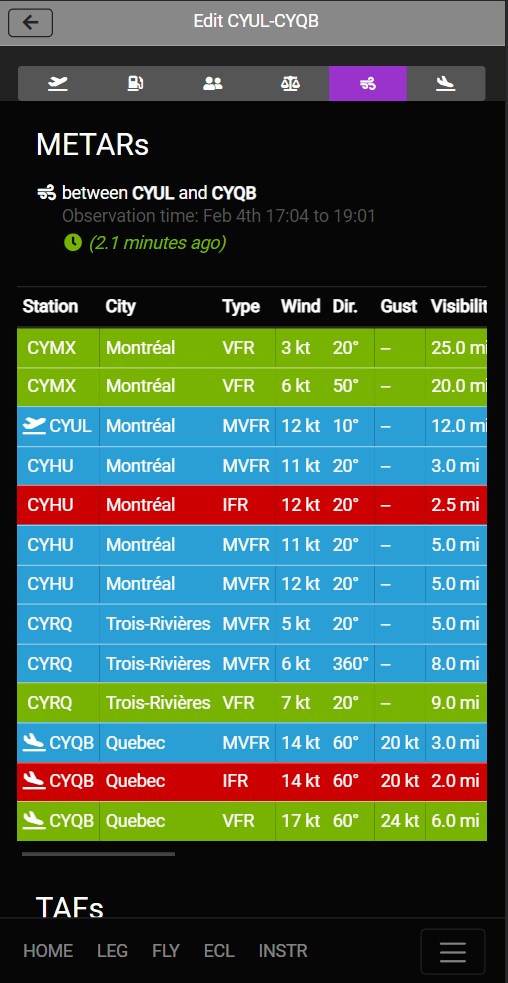
- METARs, TAFs & Winds aloft
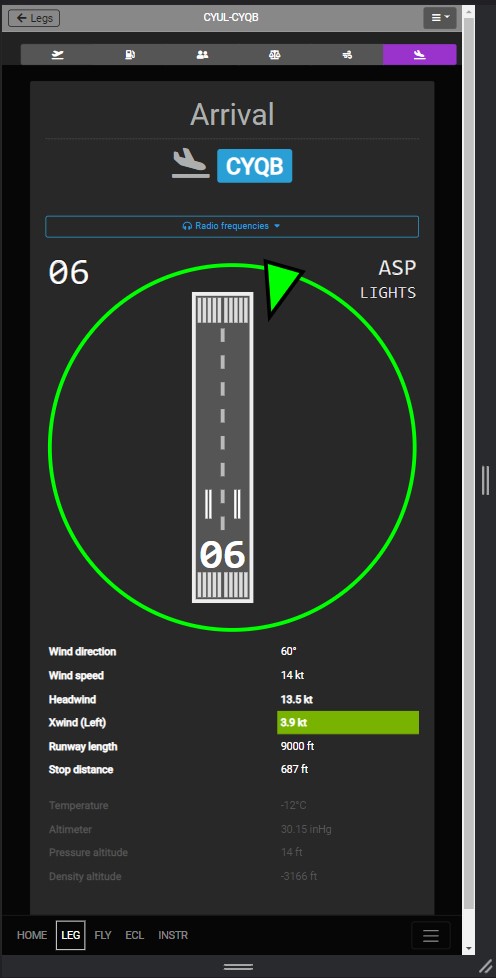
- Preferred takeoff & landing runways
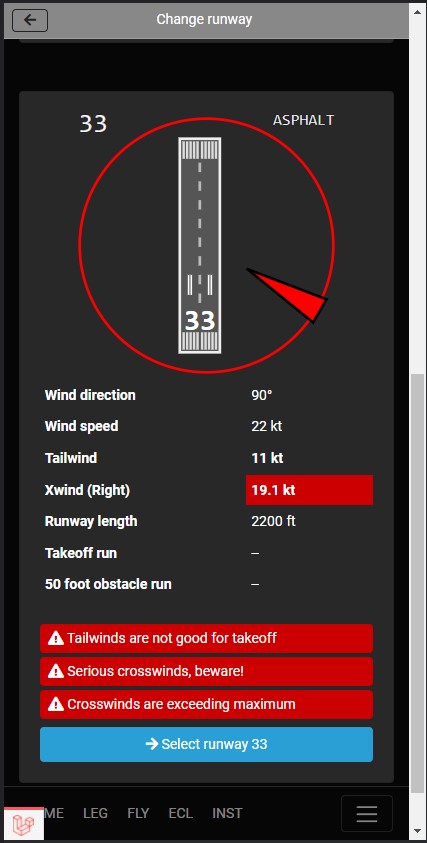
- Runways information (length, height ASL, crosswind, tail winds)
- Fuel data calculation (Upload, FIT, FOB)
- Pilot(s) & Passenger(s) data
- Weight & Balance calculations
- Takeoff & RTO distance calculations
- Calculated cruise RPM
- Calculated Fuel Flow, Fuel Burn & Endurance
- Calculated Altitude (msl)
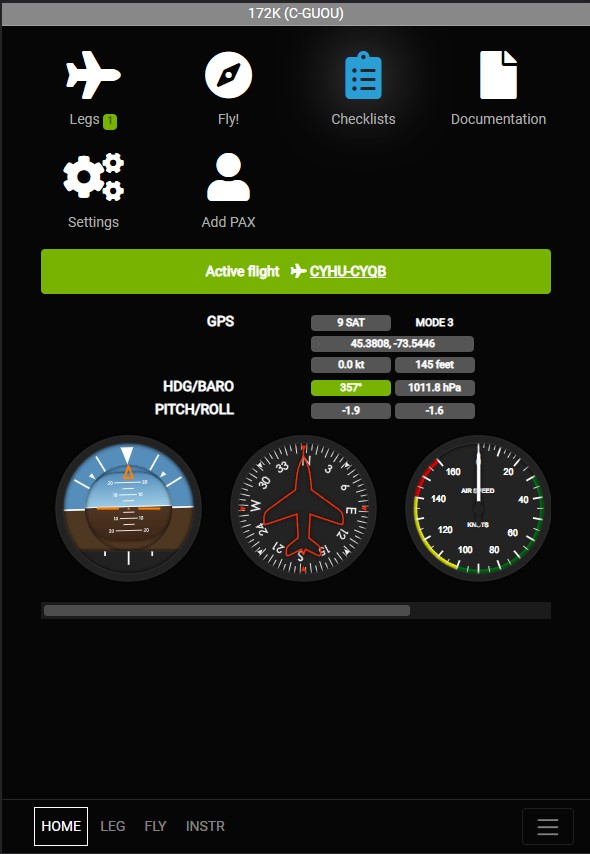
- Emergency Flight Instruments
- Real time Flight following on Blackbox Server
- Pilot’s customizable maps
- Airplane POH Checklists
- Document Library storage & access
- Automatic maintenance events tracking & alerts
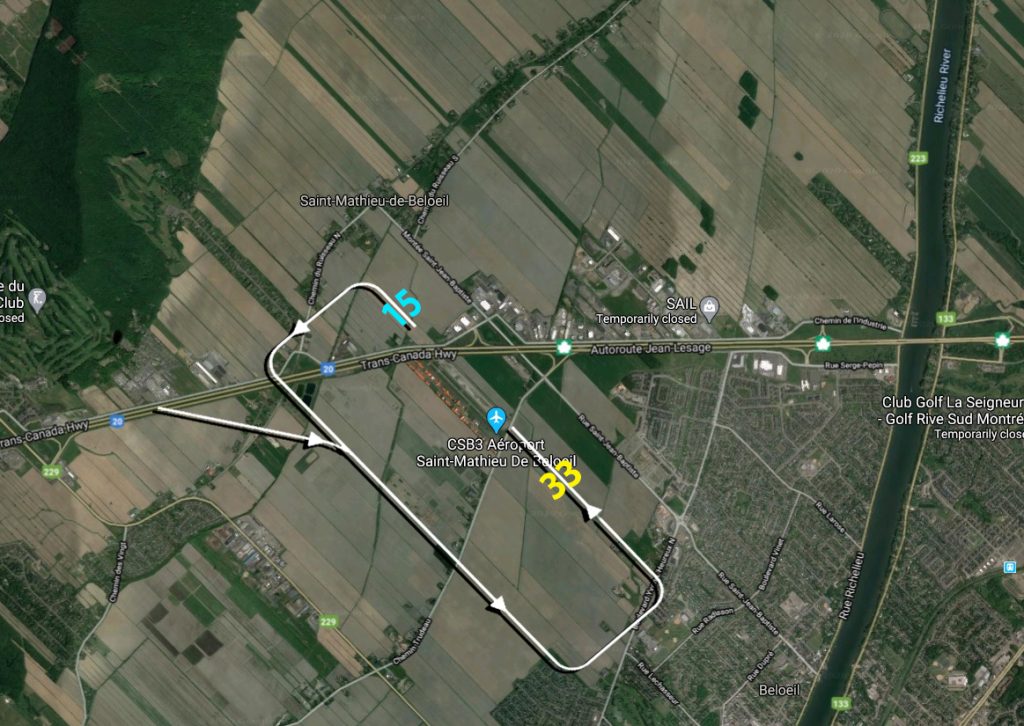
Find below a few screenshots detailing some of Blackbox pages:
Have a look at Operations & Features for additional details.
Why are we building Blackbox?
First, I have to say it is not our intention to have Blackbox compete with or replace your Garmin or ForeFlight like application. Blackbox’s main objectives are to record and store flight data points for analysis, track airplane maintenance events and offer real-time flight tracking.
Blackbox is, amongst other things, a tool for airplane owners to help them maintain a detailed record of all of their previous flights with the option of tracking their airplane maintenance schedule.
Nevertheless, having the capability to track a flight in real-time and showing the aircraft position over a map, its speed, bank angle, G load, altitude, and so on is quite an interesting capability and we believe it will contribute to enhance flight safety.
Blackbox could also be an important tool for a group of pilots with a time sharing agreement on a single airplane. Being able to easily get all of the flight data from all of the pilots from the web server in order to allocate operation cost is a plus.
One of the initial reasons that pushed me into starting the Blackbox project was probably my recurring inability to keep accurate record of times when flying my 172. On numerous occasions I would forget to record the taxi, takeoff or the landing times and after the flight I kind of had to guess some of them. I retired from the Airlines a few years ago and one thing I dearly miss are the ACARS & FMS system.
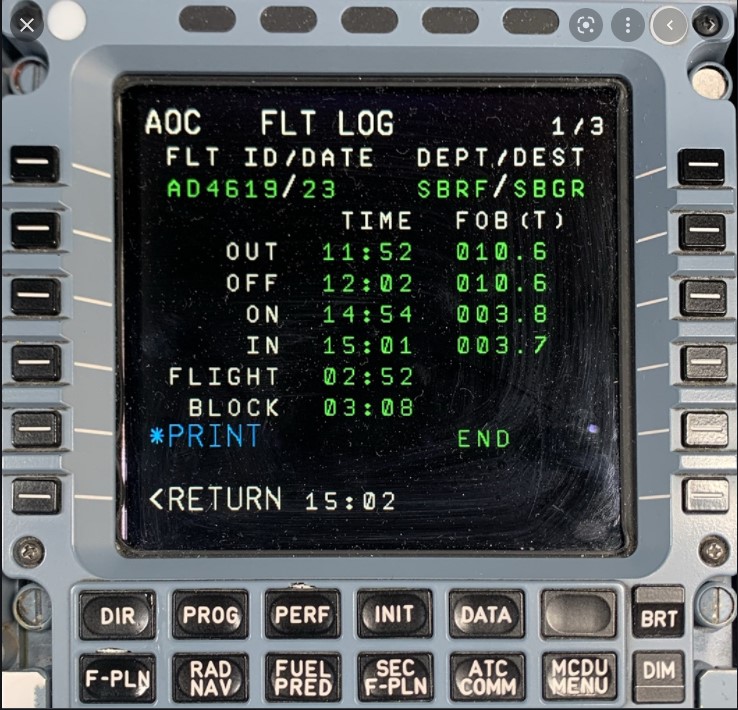
I started flying long before their introduction when pilots had to manually write down information provided over VHF or HF so it was fantastic to finally be able to get ATIS, dep clrc, WX and automatic flight times recording when ACARS & FMS were finally introduced in the early 1990s at our airline. The ACRS system gave me an idea to design a device that would automatically record OUT-OFF-ON-IN times and my first attempt was approximately 5 years ago when I had the ‘bright idea’ of using an old ADF unit and fill it with an Arduino Yún board, a GPS module and a few tiny displays.
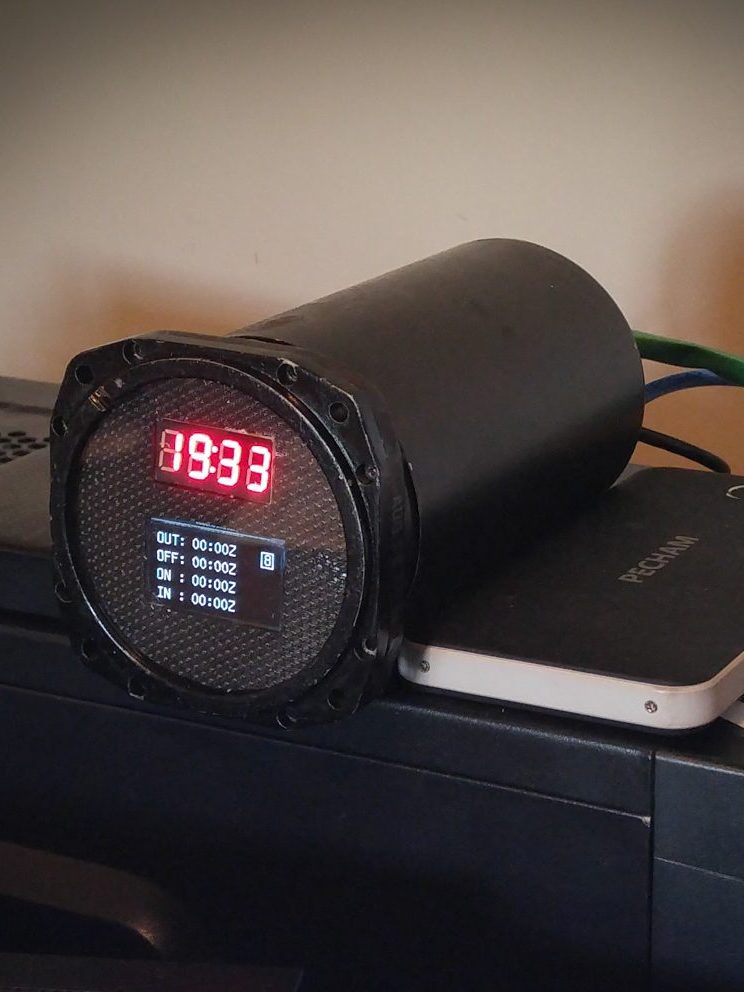
The end result was quite satisfactory and I was able to program a basic timekeeping device with no problems. The main issue was with airplane certification and I had to re-think the design to make it self contained.
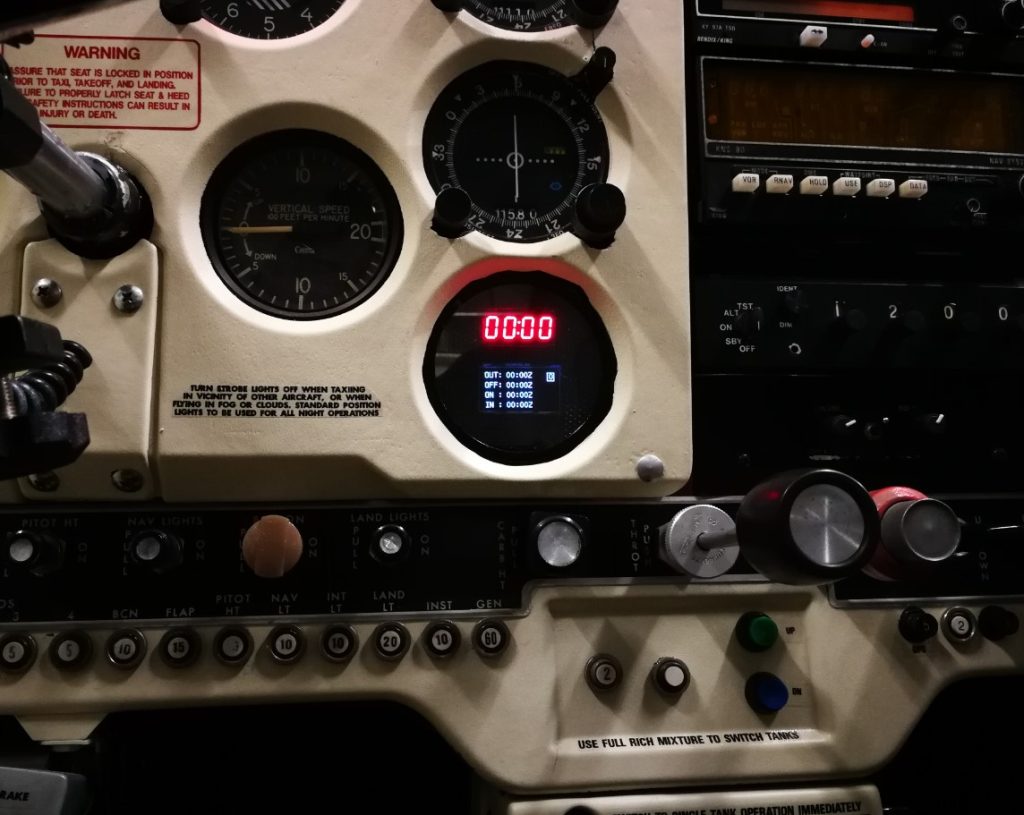
Our objective was to make Blackbox an independent system that would not compromise aircraft certification. In its present form, Blackbox uses a regular USB connector and the system can be powered from an external battery if no USB outlets are available on board. I personally used a 20,000 mAh, 3 amps Inui Power Bank battery during initial tests and was able to test Blackbox running continuously for over 10 hours.
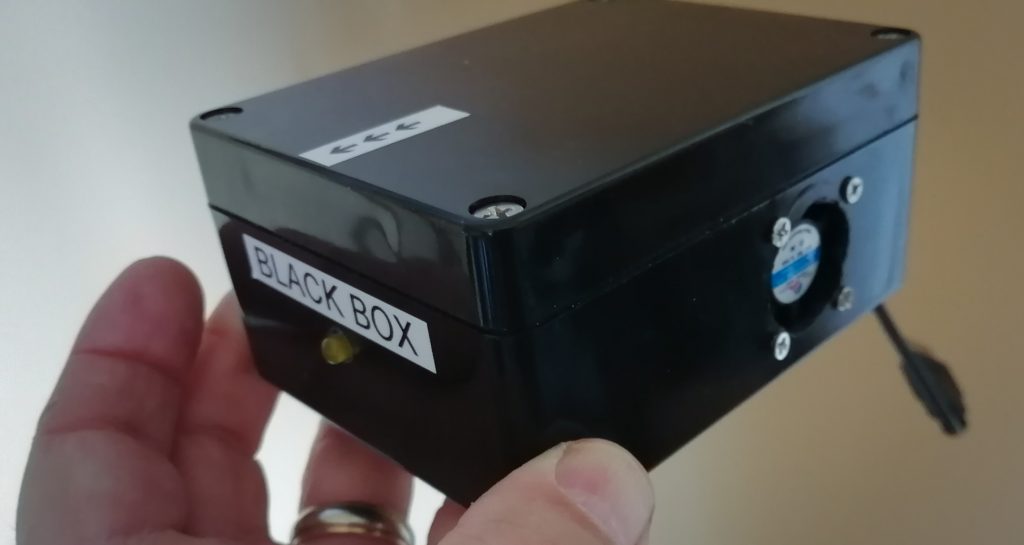
During development, the Blackbox project kind of expanded from being a simple timekeeping tool with a GPS to a more complex device with the addition of a barometric sensor, an inertial measurement unit (IMU) providing velocity, orientation & g-forces forces and a LTE cellular communication module. My sons JM and David are great software contributors to the project and every time we meet we discuss the addition of more options and features. Today, I believe we now have a useable product that is not only fun to build and use but that can make a difference in general aviation safety.